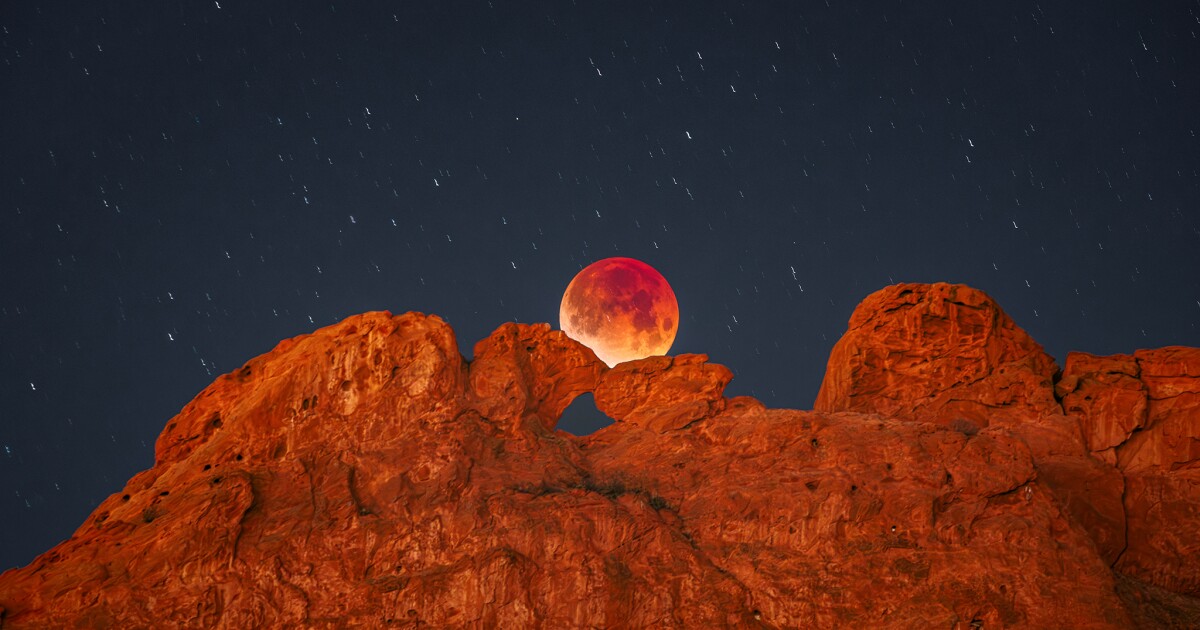
Colorado's Blood Moon: Stunning Lunar Eclipse Photos Revealed
Colorado recently witnessed a breathtaking celestial event as a total lunar eclipse transformed the moon into a radiant "blood moon." For many, it was a moment of awe; for dedicated astrophotographers across the state, it was an unparalleled opportunity to create stunning visual legacies. This article delves into the phenomenon itself, celebrates the incredible efforts of those who
captured blood moon photos, and offers insights for anyone hoping to witness – and photograph – such a spectacle in the future.
The Celestial Spectacle: Understanding the Blood Moon Phenomenon
The sight of a crimson orb hanging in the night sky is both ancient and awe-inspiring, often referred to as a "blood moon." This dramatic transformation occurs during a total lunar eclipse, a celestial alignment where our planet positions itself directly between the sun and a full moon. As the Earth casts its vast shadow across the lunar surface, the moon doesn't vanish entirely; instead, it takes on a mesmerizing reddish hue.
This distinctive coloration isn't magic, but rather a beautiful display of atmospheric physics. Sunlight, as it passes through Earth's atmosphere, is scattered. Blue light, with its shorter wavelengths, is scattered more effectively, which is why our sky appears blue during the day. Red and orange light, with longer wavelengths, penetrate the atmosphere more readily and are refracted onto the moon's surface. Essentially, you're seeing all the sunrises and sunsets happening around the globe projected onto the moon. The specific shade of red can vary based on factors like dust, clouds, or volcanic ash present in Earth's atmosphere at the time, making each blood moon a uniquely colored spectacle. It's a powerful reminder of our planet's role in creating such cosmic beauty.
To dive deeper into the science behind this incredible event, read our article:
Why Did the Moon Turn Red? Explaining the Total Lunar Eclipse.
Colorado Photographers: Dedication and Vision Captured the Blood Moon
The recent total lunar eclipse provided a unique canvas for Colorado's vibrant photography community. From bustling cityscapes to serene natural landmarks, lenses across the state were poised to immortalize this fleeting moment. What truly stands out is the immense dedication these photographers exhibited, transforming an early Tuesday morning into a tireless quest for the perfect shot.
In Fountain, Kristin Mae
captured blood moon totality just before its peak, offering a clear snapshot of its early crimson glow, a testament to timing and precision. Denver and its surrounding areas were no less active; Nikki Perry Hatle presented a captivating view from Arvada, showcasing the moon's majesty over suburban rooftops, while Winston J Herbert shared his unique perspective from Lakewood, capturing the eclipse against the awakening pre-dawn sky.
Further south, the iconic Garden of the Gods viewpoint in Colorado Springs became a hub for skywatchers and photographers alike. Paige Huang was among the earliest arrivals, setting up her gear before 2 a.m. to secure a prime spot, eventually sharing the experience with a growing throng of fellow enthusiasts. Her commitment underscores the shared wonder that events like these ignite, transforming solitary pursuits into communal observations. The coincidence of the Lantern Festival added another layer of cultural significance, making the celestial event even more memorable for some.
Perhaps most striking were the stories of photographers like Mike Skiff in Castle Rock, who candidly admitted to staying up all night, battling fatigue to ensure he didn't miss a single phase of the celestial event. His perseverance resulted in stunning images from his vantage point. Similarly, Lost Canyon Photography embarked on an early morning chase between 4 and 5 a.m., exemplifying the passion required to successfully capture such transient beauty. Michael Evans Photography also contributed to the visual chronicle, capturing not just the eclipse but also the surrounding starry canvas, adding a breathtaking layer of depth to the celestial portrait. These images are more than just photographs; they are a testament to human curiosity and the desire to connect with the cosmos, allowing those who missed the live show to relive its splendor.
Mastering Astrophotography: Tips for Capturing Your Own Blood Moon
Inspired by the stunning imagery shared by Colorado's photographers? Capturing a blood moon, or any celestial event, requires a blend of preparation, patience, and the right equipment. While professional gear can yield spectacular results, even entry-level DSLRs or mirrorless cameras can produce remarkable images with a few key considerations.
Essential Gear for Lunar Photography:
- Camera: A DSLR or mirrorless camera with full manual controls is ideal. The ability to adjust ISO, aperture, and shutter speed independently is crucial.
- Lens:
- For close-up shots of the moon, a telephoto lens (200mm or more) is highly recommended. The longer the focal length, the larger the moon will appear in your frame.
- For landscape shots that include the moon, a wide-angle lens (14-35mm) can create dramatic compositions, though the moon will be a smaller element.
- Sturdy Tripod: This is non-negotiable. Any movement will result in blurry images, especially with long exposures or telephoto lenses.
- Remote Shutter Release (or self-timer): Using a remote or the camera's 2-second self-timer minimizes camera shake when pressing the shutter button, ensuring sharper images.
- Extra Batteries: Long exposures and cold temperatures drain batteries quickly.
- Headlamp with Red Light Mode: Essential for seeing your gear and settings without impacting your night vision or disturbing other photographers.
Camera Settings for the Blood Moon:
- Manual Mode (M): Full control over your settings is paramount.
- ISO: Start around ISO 400-800 during the brighter partial phases. As the moon dims significantly during totality, you may need to increase your ISO to 1600-3200 or even higher, depending on your camera's low-light performance. Be mindful of introducing digital noise at very high ISOs.
- Aperture (f-stop): Generally, keep your aperture relatively wide open (e.g., f/5.6 to f/8) to gather sufficient light. This also helps with sharpness for many lenses.
- Shutter Speed: This is the trickiest part, as the moon's brightness changes dramatically throughout the eclipse.
- During Partial Phases: Use faster shutter speeds (e.g., 1/250 to 1/60 second).
- During Totality: The moon can become surprisingly dim. You might need shutter speeds ranging from 1 to 4 seconds, or even longer for a very dark eclipse. Experimentation is key here.
- Bracketing: Taking multiple exposures (one underexposed, one correctly exposed, one overexposed) is highly recommended to ensure you capture the full dynamic range.
- Focus: Manual focus is best. Auto-focus often struggles in low light. Focus on a bright star nearby, or use your camera's live view mode to zoom in and manually focus on the moon itself before totality.
Preparation and Execution:
- Location, Location, Location: Choose a spot with minimal light pollution and an unobstructed view of the moon's trajectory. Apps like PhotoPills or SkyView can help predict the moon's path and rise/set times.
- Arrive Early: Like Paige Huang, getting there early ensures you set up without rush, can scout your ideal composition, and account for any unforeseen challenges.
- Dress Warmly: Nights can get surprisingly cold, especially when standing still for hours. Layered clothing, gloves, and a hat are essential.
- Practice: If possible, practice focusing and shooting the full moon a few nights before the eclipse. This will help you get familiar with your gear and settings.
Remember, the goal is to capture the majesty, whether it's a close-up of the lunar surface or the "blood moon" framed against a stunning landscape. Don't be afraid to experiment!
Looking Ahead: When to Catch the Next Lunar Eclipse
While the memory of Colorado's blood moon lingers, eager skywatchers and photographers are already wondering when they can witness such a spectacle again. Total lunar eclipses, offering the full "blood moon" experience, are relatively rare events in any given location, often spaced years apart.
For those specifically hoping to experience another total lunar eclipse, the wait will be a few years. The next opportunity to see a full blood moon will not arrive until
late 2028. This makes the recent Colorado event even more significant, highlighting why so many went to great lengths to
captured blood moon moments. Such extended waits underscore the importance of seizing these fleeting celestial opportunities.
However, not all hope is lost for sooner celestial viewing. A partial lunar eclipse is anticipated in August, which could be visible across various regions, including North America, Europe, Africa, and West Asia. While it won't offer the full dramatic crimson hue of a total eclipse, it still provides a fantastic opportunity to observe Earth's shadow beginning to creep across the lunar surface and practice your astrophotography skills. Even a partial eclipse offers a unique perspective on the cosmic mechanics at play.
For specific dates and details on upcoming lunar events, including the next total blood moon, be sure to consult our guide:
Next Total Lunar Eclipse: When to See the Blood Moon in 2028.
The recent display of Colorado's blood moon was a potent reminder of the cosmos's endless wonders. From the scientific elegance behind its ruby glow to the sheer human dedication required to photograph it, this event truly captivated hearts and minds. The stunning images
captured blood moon moments, preserving the transient beauty for posterity and inspiring a new generation of skywatchers and astrophotographers. As we look to the next celestial alignments, the memory of this spectacular lunar eclipse will undoubtedly fuel our anticipation, reminding us that sometimes, the most extraordinary shows are those performed high above our heads.